
The Ownership Effect
What a simple lottery experiment teaches us about co-creating value with clients.

In MIT Sloan Management Review’s recent piece, “How the Best CEOs Find the Next Phase of Growth,” the authors describe how top leaders reinvent their organizations mid-tenure. What stood out most wasn’t their boldness or brilliance—it was their humility.
The best CEOs don’t dictate strategy. They co-create it.
As the article notes, behavioral psychologist Daniel Kahneman once ran a simple experiment to illustrate why this matters.
He divided participants into two groups.
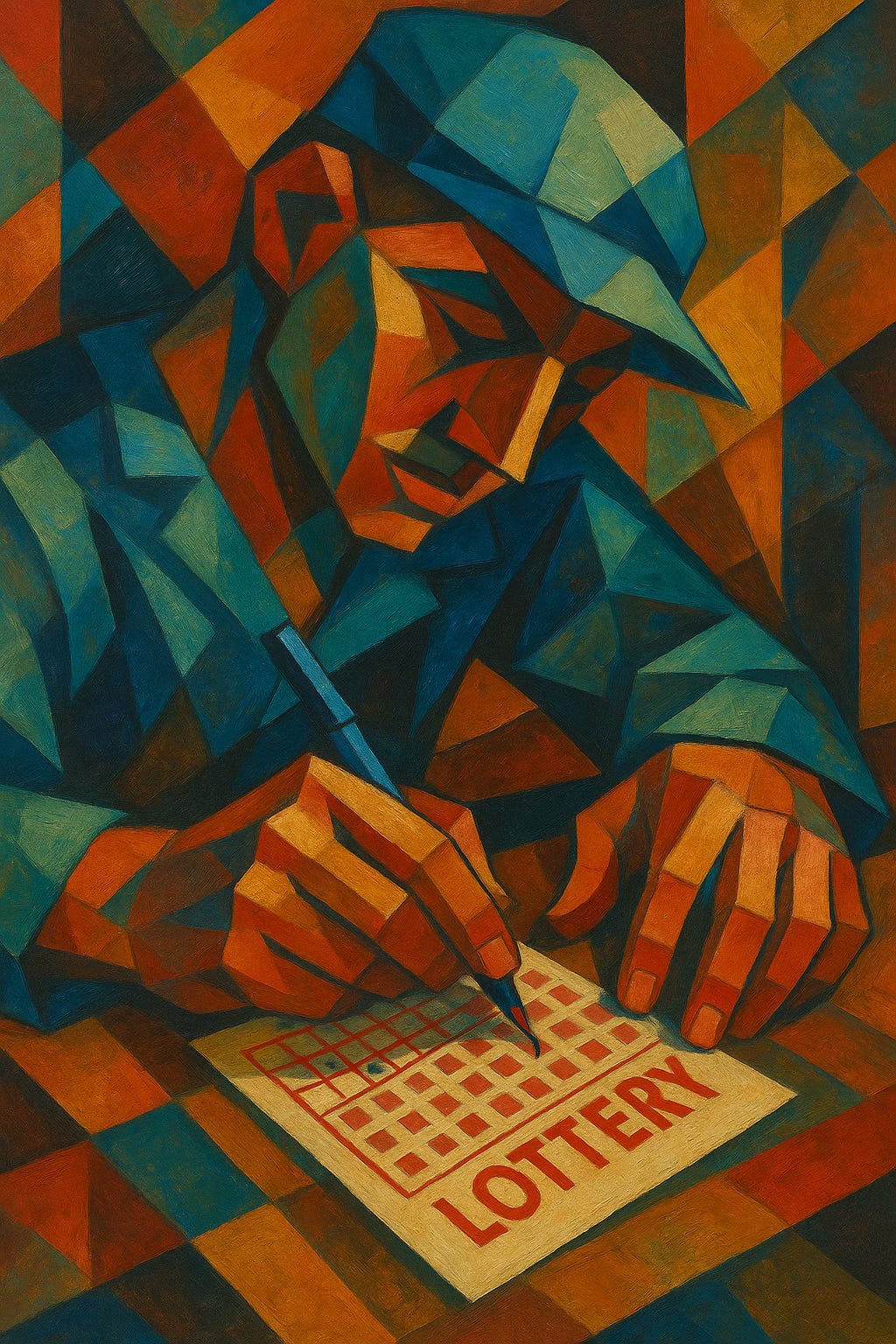
Half were each given a lottery ticket with a random number.
The other half received a blank ticket and a pen, and were asked to write down their own number.
Just before drawing the winning number, the researchers offered to buy the tickets back. Rationally, the tickets should all be worth the same. They each had the same chance of winning. But that’s not what happened.
The people who had written their own number demanded five times more money to give up their ticket than those who’d been handed one.
Same odds. Same prize. Completely different value.
Kahneman called it the “lottery ticket effect.” People value what they help create.
That’s the hidden secret of great selling.
When you build a proposal with your client, when you let them sketch the number on the ticket, they don’t just buy the idea. They own it.
Co-creation isn’t a technique; it’s an act of respect. It recognizes that the client’s fingerprints matter more than your polish.
Most sellers try to persuade. The best ones design, revise, and build—together.
Because when your client helps write the number, they’ll hold that ticket tighter than any pitch could ever make them.
Yes, but what does co-creating actually mean?
Most sellers nod when you talk about co-creating. They like the idea. It feels collaborative. It sounds modern. It is far better than tossing a proposal over the wall and hoping someone on the other side catches it.
But the truth is, co-creation is not a technique. It is a posture.
You do not “build with” someone by saying the words. You do it by changing how you show up in every conversation.
Co-creation begins long before you start drafting anything. It starts the moment you choose to behave as if you already belong, as if you are already inside the work. You stop auditioning. You stop trying to impress. You stop performing the role of a seller and start inhabiting the role of a partner who has been brought in to help navigate a change.
This shift sounds simple, but it is not. It requires three things that most seller-doers, founders, and even seasoned leaders struggle with.
1. You must create space for the client to think.
Most sellers are too quick to solve. They hear a need and rush to assemble the right powerpoint slide. Co-creation requires patience. You ask a question then let silence do its job. You let the client explore their own thinking in real time, because that is where the real gaps reveal themselves. Co-creation is slower on the front end so the work can move faster on the back end.
2. You must bring a point of view, not a pitch.
Clients cannot co-create with emptiness. They need something to react to. They need a direction, a skeleton of an idea, a first version of the truth. Not a finished answer. A place to begin. Your expertise is not there to dominate the process. It is there to set the trajectory.
3. You must treat every conversation as part of the work itself.
Most sellers treat conversations as a setup for the real work that begins after the deal closes. Co-creation flips that. The conversations are the work. The draft. The shaping. The testing. The refining.
By the time you reach a proposal, both sides should feel like they are describing something they already built together. The proposal is simply a written confirmation of what is already true.
The proposal is simply a written confirmation of what is already true.
This is why co-creation is so powerful for founder-led firms. It builds trust by doing the work, not by talking about the work. It anchors the engagement in clarity rather than persuasion. And it shortens the distance between first conversation and meaningful impact, because you were advancing the work from the start.
But “co-creation” and “selling with” do not feel adequate for what we are actually describing. We are not co-designing a document. We are aligning around a shared journey. We are building the path as we walk it, together.
This is the heart of the Bossey approach.
At Bossey, we believe growth isn’t an accident — it’s a creative act. We work with idea-led firms across research, data, consulting, and creativity to build the systems, stories, and structures that turn expertise into performance. Sometimes that means designing strategy. Sometimes it means co-creating what’s next. Always, it means growth by choice.